

Multi-mode Cleaner MC-4
The MC-4 multi-mode cleaner integrates three cleaning modes: plasma cleaning, UV cleaning, and heated desorption. It is suitable for cleaning samples for various SEM, FIB, and TEM.
Classification:
Accessories/Auxiliary Equipment
Core advantages
|
TWO PORTS FOR TEM SPECIMEN RODS
|
|
|
VACUUM STORAGE FOR TEM SPECIMEN RODS
|
 |
User Interface
- 产品描述
- 用户界面
- 性能参数
- 应用案例
-
- Commodity name: Multi-mode Cleaner MC-4
The MC-4 multi-mode cleaner integrates three cleaning modes: plasma cleaning, UV cleaning, and heated desorption. It is suitable for cleaning samples for various SEM, FIB, and TEM.
TWO PORTS FOR TEM SPECIMEN RODS
- Four-inch specimen chamber for cleaning SEM samples and wafers and small parts.
- Dedicated specimen chamber ports for simulraneous cleaning of 2 TEM sample holders (TFS, JEOL, and/or Hitachi).
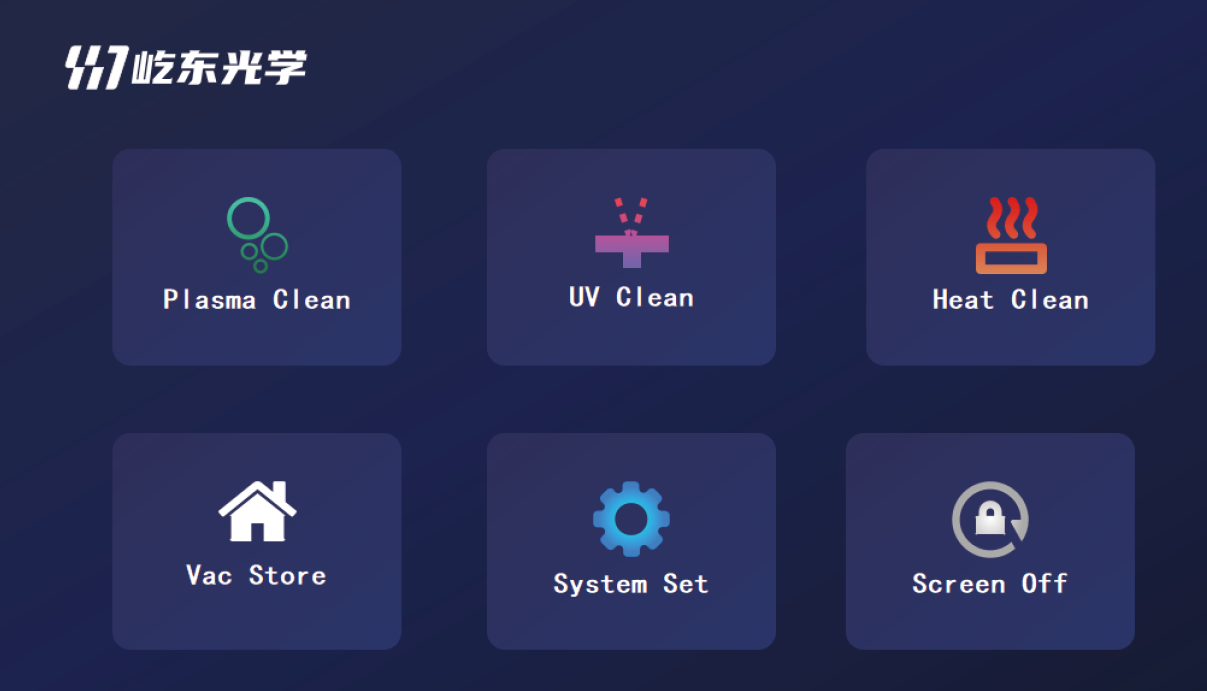
- High-resolution touchscreen for easy operation.
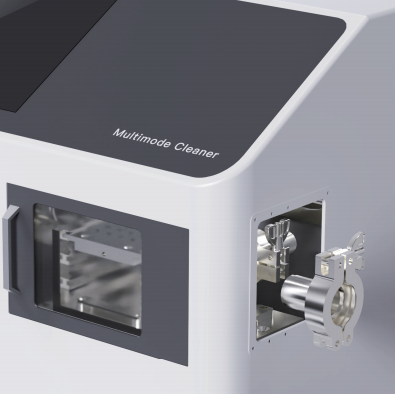
VACUUM STORAGE FOR TEM SPECIMEN RODS
- The system can also be used as a vacuum storage after sample cleaning.
- One click for easy switching between working languages.
-
- Simple user interface, cleaning recipes stored for easy selection.
- Displayed major processing parameters, touch to change.
- Modular design, quick switching between different cleaning modes.
- Easy maintenance.
-
OVERALL PARAMETERS OF THE INSTRUMENT Size of equipment (L*W*H) 520*380*380mm Weight 30kg Sample chamber size (L*W*H) 120*120*150mm Touch screen size 10.1inch System power Max 500W WORKING PARAMETERS FOR HEATED DESORPTION Maximum temperature 150℃ Temperature control accuracy ±2℃ Heating power Max 250W WORKING PARAMETERS FOR UV CLEANING Radiation power Max 50W Operating vacuum 5*104Pa WORKING PARAMETERS FOR PLASMA CLEANING Cleaning power 100W Operating vacuum <80Pa RF frequency 13.56MHz Characteristic resistance 50Ω -
1. Plasma cleaning
- Inductively Coupled Plasma (ICP) technology to generates plasma with much higher oxygen plasma density than traditional capacitively coupled technology.
- Oxygen plasma can efficiently react with surface hydrocarbon contaminants on sample surfaces to decompose them.
- "Downstream" cleaning approach has no damage to the sample and preserves original surface morphology.
Clip sample


Before : There is obvious carbon deposit in the central area
After : the carbon deposits are cleaned
2. UV cleaning
- Two special frequencies of UV lights simultaneously irradiate the sample chamber.
- High concentration and highly active oxygen radicals are generated in the sample chamber.
- Oxygen radicals react with surface hydrocarbon contaminants to remove them.
Silicon wafer sample
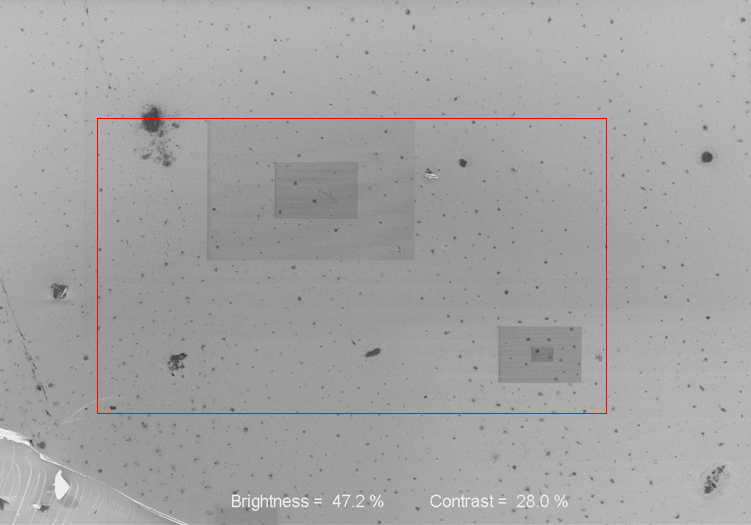
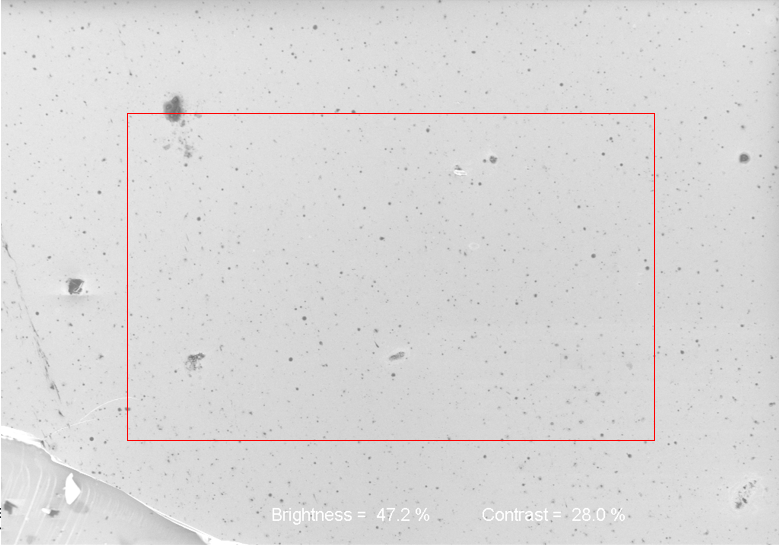
Before : There is obvious carbon deposit in the central area After : the carbon deposits are cleaned 3. Heated desorption
- The sample chamber can be heated quickly, up to 150℃.
- High-precision temperature control, the temperature accuracy is controlled within ±2℃.
- Combined with vacuum pumping, can quickly evaporate and remove adsorbed surface organic componds on the sample.
Iron-platinum nanoparticle sample (organic solvent ultrasonic dispersion treatment)
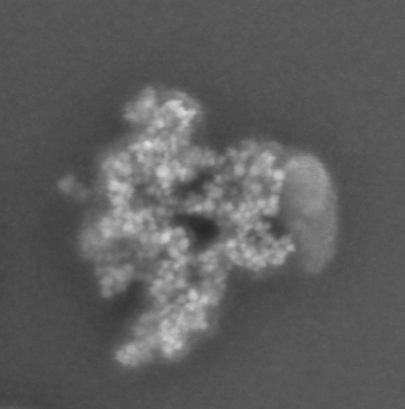
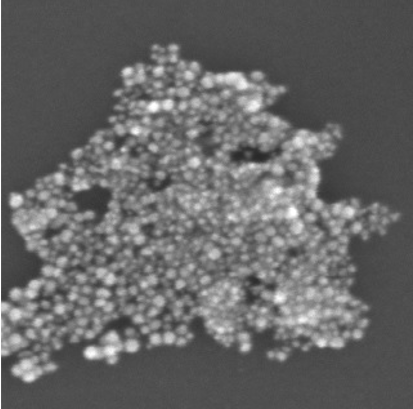
Before cleaning, organic solvent is wrapped around the particles, and the boundaries are blurred during imaging. After cleaning, the organic solvent around the particles is removed, and the imaging clarity is significantly improved.
Performance parameters
- 产品描述
- 用户界面
- 性能参数
- 应用案例
-
- Commodity name: Multi-mode Cleaner MC-4
The MC-4 multi-mode cleaner integrates three cleaning modes: plasma cleaning, UV cleaning, and heated desorption. It is suitable for cleaning samples for various SEM, FIB, and TEM.
TWO PORTS FOR TEM SPECIMEN RODS
- Four-inch specimen chamber for cleaning SEM samples and wafers and small parts.
- Dedicated specimen chamber ports for simulraneous cleaning of 2 TEM sample holders (TFS, JEOL, and/or Hitachi).
- High-resolution touchscreen for easy operation.
VACUUM STORAGE FOR TEM SPECIMEN RODS
- The system can also be used as a vacuum storage after sample cleaning.
- One click for easy switching between working languages.
-
- Simple user interface, cleaning recipes stored for easy selection.
- Displayed major processing parameters, touch to change.
- Modular design, quick switching between different cleaning modes.
- Easy maintenance.
-
OVERALL PARAMETERS OF THE INSTRUMENT Size of equipment (L*W*H) 520*380*380mm Weight 30kg Sample chamber size (L*W*H) 120*120*150mm Touch screen size 10.1inch System power Max 500W WORKING PARAMETERS FOR HEATED DESORPTION Maximum temperature 150℃ Temperature control accuracy ±2℃ Heating power Max 250W WORKING PARAMETERS FOR UV CLEANING Radiation power Max 50W Operating vacuum 5*104Pa WORKING PARAMETERS FOR PLASMA CLEANING Cleaning power 100W Operating vacuum <80Pa RF frequency 13.56MHz Characteristic resistance 50Ω -
1. Plasma cleaning
- Inductively Coupled Plasma (ICP) technology to generates plasma with much higher oxygen plasma density than traditional capacitively coupled technology.
- Oxygen plasma can efficiently react with surface hydrocarbon contaminants on sample surfaces to decompose them.
- "Downstream" cleaning approach has no damage to the sample and preserves original surface morphology.
Clip sample
Before : There is obvious carbon deposit in the central area
After : the carbon deposits are cleaned
2. UV cleaning
- Two special frequencies of UV lights simultaneously irradiate the sample chamber.
- High concentration and highly active oxygen radicals are generated in the sample chamber.
- Oxygen radicals react with surface hydrocarbon contaminants to remove them.
Silicon wafer sample
Before : There is obvious carbon deposit in the central area After : the carbon deposits are cleaned 3. Heated desorption
- The sample chamber can be heated quickly, up to 150℃.
- High-precision temperature control, the temperature accuracy is controlled within ±2℃.
- Combined with vacuum pumping, can quickly evaporate and remove adsorbed surface organic componds on the sample.
Iron-platinum nanoparticle sample (organic solvent ultrasonic dispersion treatment)
Before cleaning, organic solvent is wrapped around the particles, and the boundaries are blurred during imaging. After cleaning, the organic solvent around the particles is removed, and the imaging clarity is significantly improved.
Application Cases
- 产品描述
- 用户界面
- 性能参数
- 应用案例
-
- Commodity name: Multi-mode Cleaner MC-4
The MC-4 multi-mode cleaner integrates three cleaning modes: plasma cleaning, UV cleaning, and heated desorption. It is suitable for cleaning samples for various SEM, FIB, and TEM.
TWO PORTS FOR TEM SPECIMEN RODS
- Four-inch specimen chamber for cleaning SEM samples and wafers and small parts.
- Dedicated specimen chamber ports for simulraneous cleaning of 2 TEM sample holders (TFS, JEOL, and/or Hitachi).
- High-resolution touchscreen for easy operation.
VACUUM STORAGE FOR TEM SPECIMEN RODS
- The system can also be used as a vacuum storage after sample cleaning.
- One click for easy switching between working languages.
-
- Simple user interface, cleaning recipes stored for easy selection.
- Displayed major processing parameters, touch to change.
- Modular design, quick switching between different cleaning modes.
- Easy maintenance.
-
OVERALL PARAMETERS OF THE INSTRUMENT Size of equipment (L*W*H) 520*380*380mm Weight 30kg Sample chamber size (L*W*H) 120*120*150mm Touch screen size 10.1inch System power Max 500W WORKING PARAMETERS FOR HEATED DESORPTION Maximum temperature 150℃ Temperature control accuracy ±2℃ Heating power Max 250W WORKING PARAMETERS FOR UV CLEANING Radiation power Max 50W Operating vacuum 5*104Pa WORKING PARAMETERS FOR PLASMA CLEANING Cleaning power 100W Operating vacuum <80Pa RF frequency 13.56MHz Characteristic resistance 50Ω -
1. Plasma cleaning
- Inductively Coupled Plasma (ICP) technology to generates plasma with much higher oxygen plasma density than traditional capacitively coupled technology.
- Oxygen plasma can efficiently react with surface hydrocarbon contaminants on sample surfaces to decompose them.
- "Downstream" cleaning approach has no damage to the sample and preserves original surface morphology.
Clip sample
Before : There is obvious carbon deposit in the central area
After : the carbon deposits are cleaned
2. UV cleaning
- Two special frequencies of UV lights simultaneously irradiate the sample chamber.
- High concentration and highly active oxygen radicals are generated in the sample chamber.
- Oxygen radicals react with surface hydrocarbon contaminants to remove them.
Silicon wafer sample
Before : There is obvious carbon deposit in the central area After : the carbon deposits are cleaned 3. Heated desorption
- The sample chamber can be heated quickly, up to 150℃.
- High-precision temperature control, the temperature accuracy is controlled within ±2℃.
- Combined with vacuum pumping, can quickly evaporate and remove adsorbed surface organic componds on the sample.
Iron-platinum nanoparticle sample (organic solvent ultrasonic dispersion treatment)
Before cleaning, organic solvent is wrapped around the particles, and the boundaries are blurred during imaging. After cleaning, the organic solvent around the particles is removed, and the imaging clarity is significantly improved.
Customer service telephone
Enterprise mailbox
Company address
Rooms 101 and 201, Building 11, No 8, Jinfeng Road, Suzhou New District, Jiangsu Province, China
Copyright©2023 Yidon Technologies Co., Ltd. All rights reserved Website Construction:China Enterprise Power Kunshan SEO